
The Top Fencing Materials for Maximum Privacy
A privacy fence should do more than mark the edge of a property. It should interrupt important sightlines, suit the home's appearance, tolerate local weather, and remain manageable within the owner's budget. Material choice affects opacity, maintenance, expected service life, repair options, and the way the fence responds to wind, moisture, sunlight, and changing temperatures.
Wood, vinyl, and composite are three leading choices because each can be built with solid or closely fitted panels. However, the material alone does not create privacy. Height, board spacing, gate placement, terrain, and installation quality determine how effectively the finished barrier blocks views. Planning local fence installation around the site and the owner's priorities is therefore as important as selecting the fence material.
Start With the Privacy Requirements
Before comparing materials, homeowners should identify where privacy is needed. A fence along a street may need to interrupt views toward a patio or pool, while a side-yard fence may address upper windows, a neighboring deck, or a frequently used walkway. Looking at the property from sitting and standing positions helps reveal angles that a basic boundary plan may miss.
Height is a major factor. According to The Spruce, a fence intended primarily for privacy should stand at least six feet tall. That recommendation is a useful starting point rather than permission to build at any height. Municipal codes, utility easements, corner visibility rules, homeowners association standards, permits, and pool regulations may control fence height, location, materials, or gate design.
Opacity also deserves attention. Solid panels block more direct views than widely spaced boards, pickets, lattice, or ornamental metal. Board-on-board designs can preserve screening as wood expands and contracts, while tongue-and-groove or interlocking systems limit gaps. On sloped properties, panels may need to step or follow the grade without creating open spaces underneath.
Wood Offers Traditional Style and Flexibility
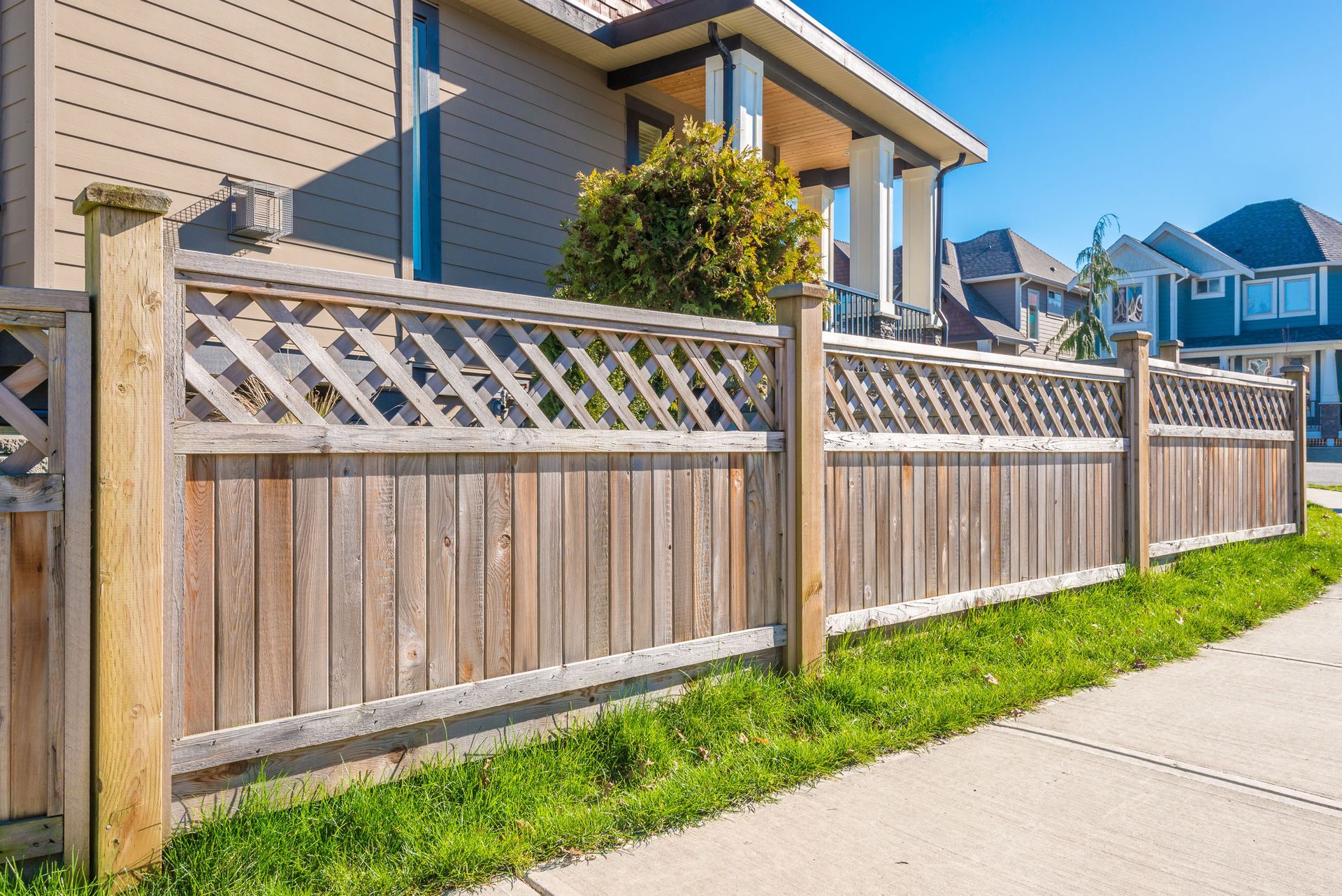
Wood remains popular because it can be cut, shaped, stained, painted, and arranged in many privacy-focused designs. Solid vertical boards create a straightforward barrier, while board-on-board construction overlaps boards to reduce gaps. Horizontal layouts offer a contemporary appearance but require appropriate framing to control sagging or movement. Decorative caps and limited lattice can add detail, although open sections reduce privacy.
Cedar, redwood, pressure-treated pine, and other species vary in price, appearance, availability, and resistance to decay or insects. No wood is maintenance-free. Local climate, soil contact, drainage, finish quality, and construction details influence performance. A contractor providing local fence installation can recommend available species and fasteners suited to the exposure rather than assuming that one wood performs equally well in every region.
Wood's main advantage is repairability. An individual board can often be replaced without removing an entire run, and the finish can be changed as the property evolves. It may also be easier to adapt wood around grade changes or unusual boundaries. Initial cost can be competitive, particularly with widely available species, but the full budget should include staining, sealing, painting, cleaning, and periodic board or post replacement.
Vinyl Provides Solid Screening With Less Routine Upkeep
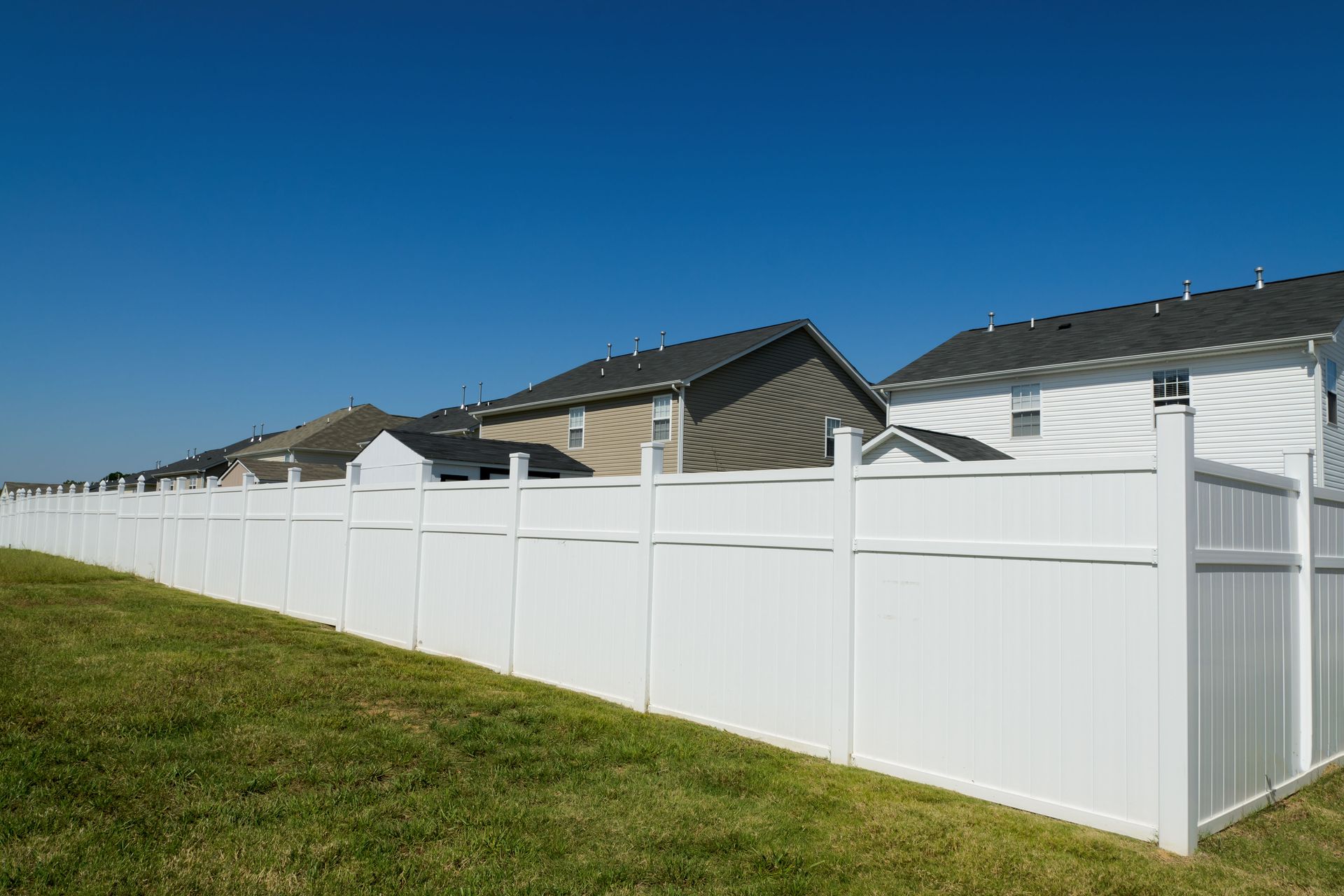
Vinyl privacy fencing commonly uses solid or interlocking panels that create consistent coverage. It does not need staining or painting and will not rot like wood. Routine cleaning may be sufficient for dirt and many surface deposits. These qualities appeal to homeowners who want a uniform appearance without committing to recurring finish applications.
Material quality and internal construction matter. Panel thickness, post dimensions, rail design, reinforcement, and manufacturer specifications can affect how the fence performs under wind or impact. Vinyl also expands and contracts with temperature changes, so components need appropriate spacing and assembly. Professional local fence installation can account for manufacturer requirements, post depth, ground conditions, and wind exposure when developing the layout.
Vinyl has limitations. Severe impact may crack a panel, and matching an older color or discontinued profile can make repairs more complicated than replacing a wood board. Darker colors and specific styles may have different heat or installation considerations. Owners should ask how damaged sections are replaced and whether internal reinforcement is recommended for gates, high-wind areas, or long panel runs.
Composite Balances a Wood-Like Look With Durability
Composite fencing generally combines wood fibers, plastics, and binding agents in proportions that vary by manufacturer. It is designed to provide a wood-like appearance with reduced susceptibility to rot, splintering, and insect damage. Solid composite boards or panels can create strong visual screening, and color is often integrated into the material rather than applied as a separate finish.
The material is heavier than many alternatives and may require a specific post, rail, or reinforcement system. Installation instructions control spacing, fasteners, clearances, and allowable spans. Because brands are not interchangeable, local fence installation should follow the specifications for the selected product. Substituting components or exceeding recommended spans may affect both performance and warranty coverage.
Composite typically carries a higher initial price than common wood and sometimes vinyl. Its value depends on how long the owner expects to keep the property, the cost of maintenance avoided, and the product's actual warranty. It still needs cleaning, and scratches, stains, or damaged boards may be difficult to repair invisibly. Samples should be viewed outdoors because color and texture can look different in full sunlight than in a showroom.
Compare Privacy Design, Not Just Material
A solid fence may still fail to provide the expected seclusion if gates have large gaps, panels stop short on a slope, or posts are poorly aligned. Gate hardware should hold the gate square and allow it to close reliably. The bottom gap must balance privacy with drainage, terrain, vegetation, and clearance needs. Homeowners should also consider whether snow, leaves, or soil will collect against the fence.
Wind is an important design issue because solid panels behave differently from open fencing. Post size, depth, spacing, footing design, and reinforcement should respond to soil and exposure. Simply choosing the thickest-looking panel does not establish structural suitability. Contractors should follow local requirements and manufacturer instructions while accounting for gates and corners, where loads and movement may differ.
Evaluate the Complete Cost of Ownership
The installed price includes more than panels. Posts, rails, gates, hardware, concrete, removal of an existing fence, grading, difficult access, permits, utility coordination, and disposal can all affect cost. Property boundaries should be confirmed before construction, and required utility-location procedures must be followed before digging. An itemized proposal makes comparisons more meaningful by showing what each contractor includes.
Reputable providers should explain the proposed materials, panel configuration, post spacing, gate construction, warranty responsibilities, and exclusions. During local fence installation, site preparation and careful alignment help the chosen material perform as intended. A clear written scope also reduces confusion about permits, old-fence removal, landscaping disruption, property lines, and restoration after the work is finished.
Wood offers customization, repairability, and traditional character but requires regular care. Vinyl provides consistent opacity with limited finish maintenance, while composite pairs a wood-like appearance with resistance to several common forms of deterioration. None is universally best. Climate, desired appearance, site exposure, repair expectations, ownership period, and total budget should guide the decision.
Effective privacy ultimately depends on design and execution as much as material. Homeowners should verify allowable height, study sightlines, compare full-size samples, and request detailed proposals before scheduling local fence installation. When the panel style, gate layout, structure, and maintenance plan all support the property's needs, the finished fence can provide lasting separation without creating avoidable problems elsewhere on the site. For expert local fence installation services, turn to Able Fence LLC!

Share On: